
Photo Credit: @taypaigey
School Mental Wellness Protective Factors
The questions in this section relate to school mental wellness protective factors---the support, environments, and practices that help students maintain positive mental health and overall well-being.
School-based mental health and wellness approaches play a critical role in supporting students. When schools intentionally create supportive environments and provide accessible resources, they strengthen the protective factors that promote student well-being, engagement, and resilience. These protective supports reflect the collective efforts of the school community to foster healthy development, educational success, and a strong sense of belonging among students.
Programs and practices that build community, connection, and belonging within schools can significantly strengthen student mental health and create environments where students feel valued, supported, and safe.
Examples of school mental wellness protective factors and supports include:
-
Students' disability-related needs are recognized, understood, and supported. Students have access to appropriate educational accommodations, supports, and services that help them access and manage their education and realize their full potential.
-
Schools promote a positive school climate in which students experience a strong sense of pride, belonging, and connection within their school community.
-
Students experience their school as a safe and supportive environment.
-
Students have access to trusted adults within the school---staff members who provide guidance, safety, and support.
-
Students have opportunities to participate in school programs such as clubs, associations, teams, and other extracurricular activities that strengthen engagement and social connection.
-
School staff recognize that incorporating students' interests, passions, and motivators---along with encouraging daily physical activity and healthy habits---can reinforce positive mental wellness.
-
Schools teach social-emotional learning, including self-awareness and emotional awareness. These skills help students develop the language, understanding, and resilience needed to manage stress and adversity, solve problems, make informed decisions, recognize challenges, and strengthen protective factors that reduce potential suicide risk.
These protective factors contribute to healthier school environments where students can thrive academically, socially, and emotionally.

The Wellness Tree was developed in partnership with the Youth MOVE Broward chapter, Florida, in 2017. The Wellness Tree was originally developed for their Wellness Day theme which was an integration of mental and physical health with the tagline “There’s no health without mental health”. The tree symbolized that integration. It was developed by Justine Bristol from Youth MOVE Broward under the One Community Partnership 2 grant. YMHC was given permission to use the Wellness tree.
Significant Findings and YMHC insights:
Significant findings:
- School attendance challenges is related to the experience students have related to school.
- More than three quarters (77%) of respondents have negative experiences in school.
- More than 40% of respondents have a significant negative reaction to going to school.
- More than half of respondents who have a significant negative reaction to school have missed more than 1 month of school days in the past year.
- Children who feel excluded from the school experience, including those who feel unsafe, do not belong to peer groups, have no school staff to talk to, and are more likely to miss long periods of school.
We know that all people need to feel a sense of belonging. Building a community of support and acceptance can help young people with mental health challenges and disabilities feel less isolated and more supported.
The School Attendance Challenges survey highlights some of the experiences of students:
- Their lack of involvement in clubs, groups, and associations
- The lack of safety students experience
- The lack of caring or “trusted” adults
The result of these experiences include:
- Decreased belongingness can result in greater mental health challenges and suicide experiences
- A lack of belongingness to a social peer group can impact students’ academic achievement.
- Having a decreased sense of belonging has been linked to higher levels of loneliness and depression
School Experiences:
- More than three quarters (77%) of respondents have negative experiences in school.
- More than 40% of respondents have a significant negative reaction to going to school.
- More than half of respondents who have a significant negative reaction to school have missed more than 1 month of school days in the past year.
Students with negative experiences in schools tend to miss more school days. When students feel unsafe, detached from their school community, isolated, and judged negatively, the result is a feeling of exclusion from the students and staff in their school community. That was found to be the origin and truth of “school attendance challenges” for respondents.
Most parents believe their child has a strong interest in learning and extracurricular activities, yet the same child still struggled when it came to mental health and wellness in accessing and managing an education. Having a sense of connection and belonging is a positive protective factor in supporting student mental health.
- Children who feel excluded from the school experience, including those who feel unsafe, do not belong to peer groups, have no school staff to talk to, are more likely to miss long periods of school.
- The importance (and absence) of safe people, safe places, safe school communities, trusted adults, and caring champions was indicated by many young people.
Where did school support (for school attendance challenges) come from?
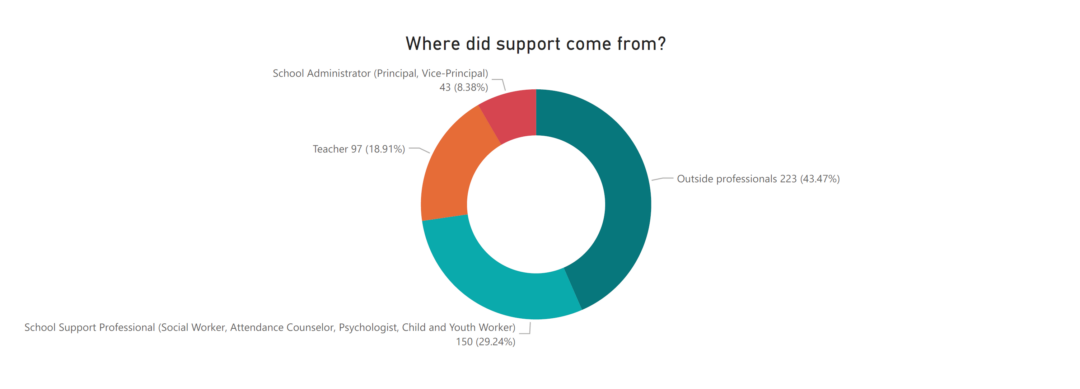
Almost half of the support that students received (47%) was from outside professionals and not from school staff. School administrators provided less than 10 percent of the support received. Leadership from school administrators is essential in facilitating needs-based educational accommodations.
Respondent children’s opinion toward school:
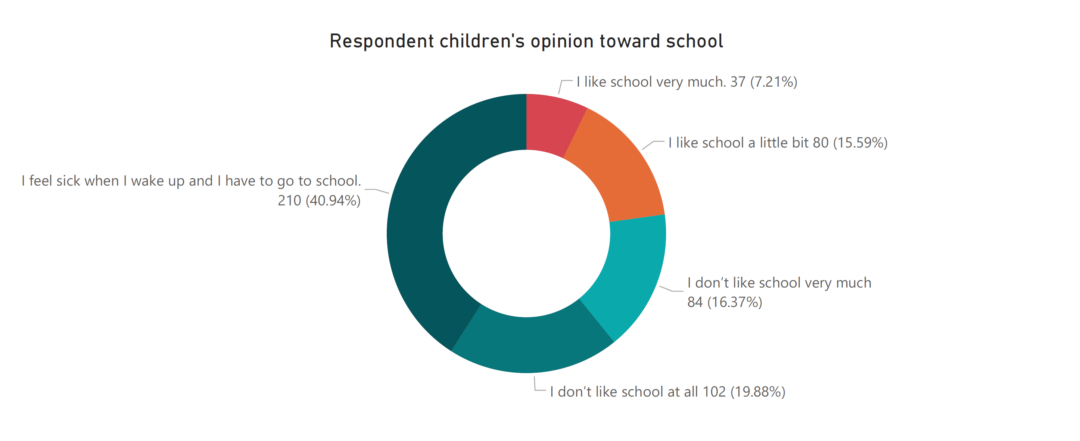
Almost 80 % of parent respondents indicated that their child does not like school. Forty-one percent of students feel sick when they wake up on school days and must go to school.
Does your child feel safe at school?
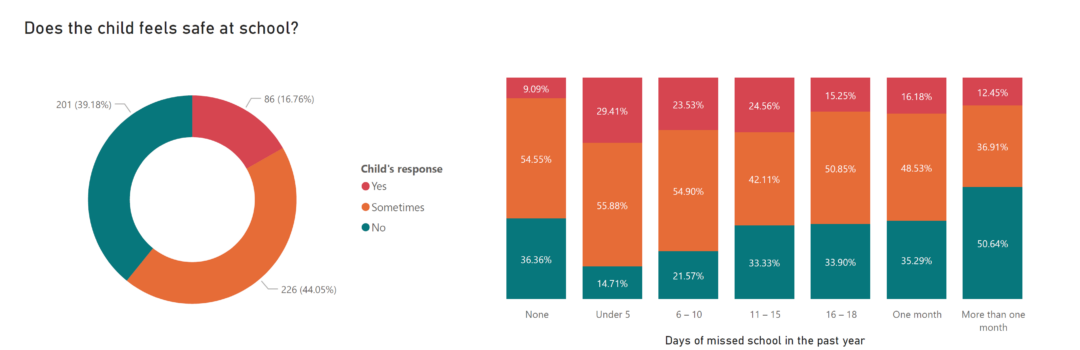
Forty percent of students indicated that they do not feel safe at school and 44 percent said that they sometimes do not feel safe at school. A total of 84 percent of students with school attendance challenges do not feel safe at school.
Does your child feel close to people at this school?
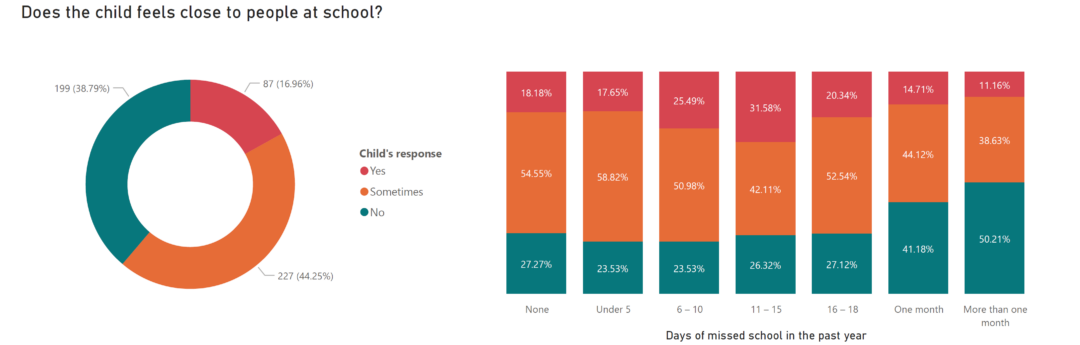
Thirty-nine percent of students indicated that they do not feel close to people at school. Forty-four percent sometimes felt close to people. In total, 83 percent of students did not feel close to people at school.
Does your child feel a part of this school?
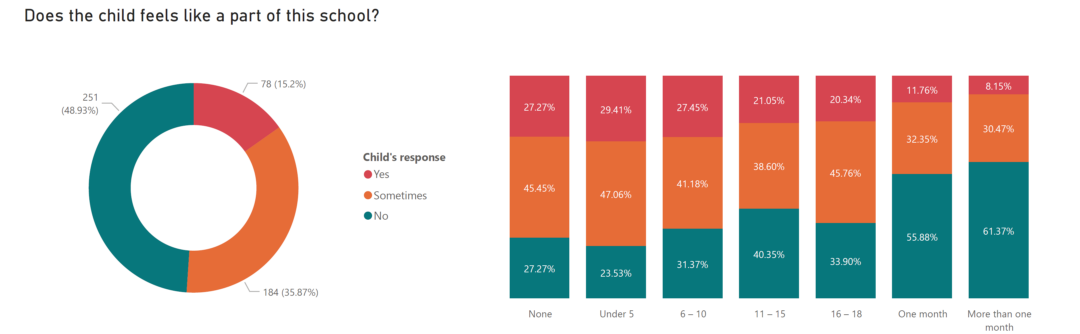
Over 48 percent of students did not feel a part of their school. An additional 38 percent sometimes did not feel a part of the school. Only 15 percent of students with school attendance challenges felt a part of their school.
Is there a school staff member that your child feels comfortable talking to?
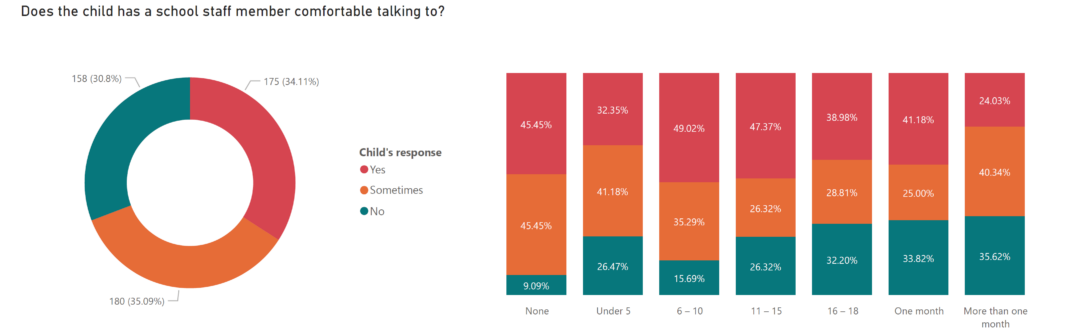
Thirty-one percent of students did not have a staff member they felt comfortable talking to. Thirty-five percent of students sometimes had a staff member they felt comfortable with. Sixty-six percent of students did not have a staff member they felt comfortable talking to. Thirty-four percent of students did.
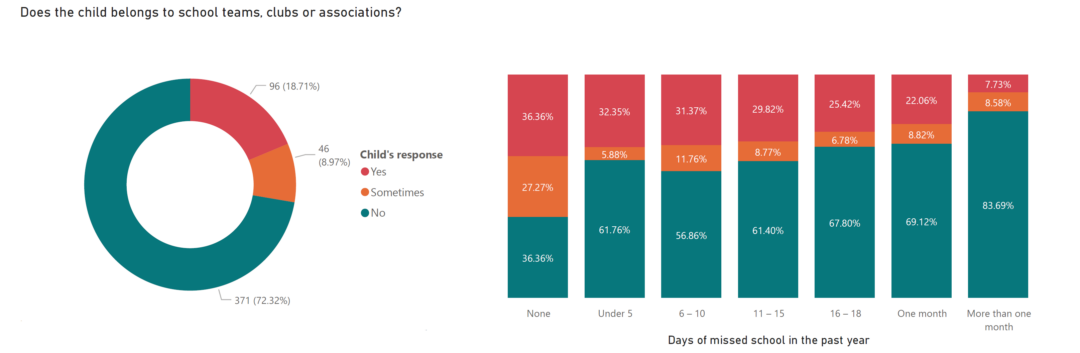
Does your child belong to any school teams, clubs, or associations?
Thirty-one percent of students did not have a staff member they felt comfortable talking to. Thirty-five percent of students sometimes had a staff member they felt comfortable with. Sixty-six percent of students did not have a staff member they felt comfortable talking to. Thirty-four percent of students did.
Does your child belong to any community teams, clubs, or associations?
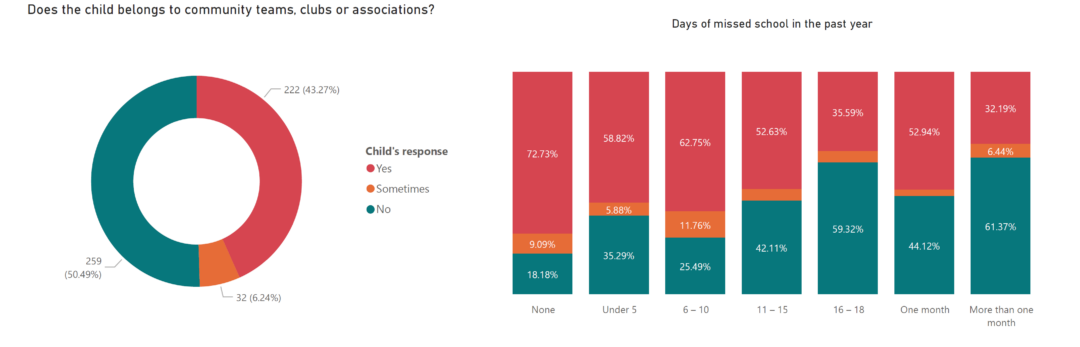
Two-hundred and fifty-nine students (of 519) do not belong to any community teams, clubs, or associations. Thirty-two sometimes belong to outside organizations. Forty-three percent of young people belong to a community organization (222 out of 519).
Does your child have any strong interests, passions, or past times?
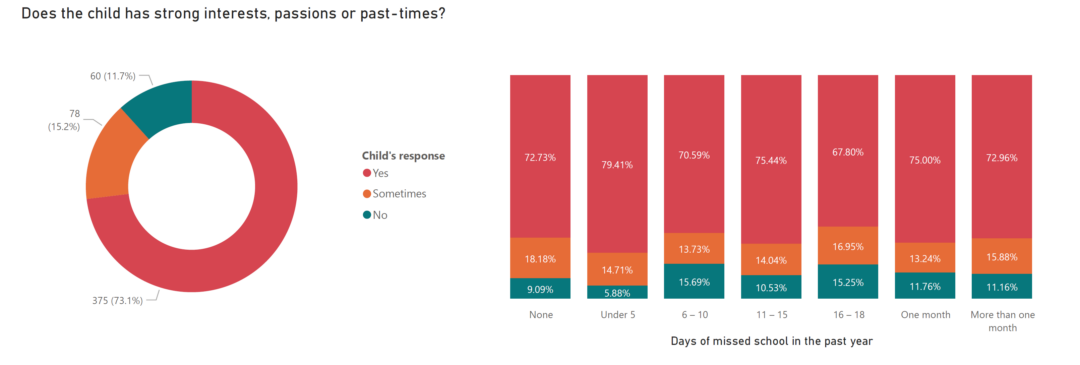
Seventy-three percent indicated “yes”, and 15 percent indicated “sometimes” to having strong interests, passions, and past times. Only 11.7 percent indicated that they did not have strong interests, passions, or past time activities.
This information is important: if we used what motivates young people (their strong interests, passions, and past time activities, we might be able to influence their feelings about school).