Shared Commitment to Change
 |
|
 |
|
 |
|
If we, as a society, believe that an education is a human right and an important societal value, why are we not doing more for students with disabilities, school attendance challenges, neurodivergence, and barriers to education who are not able to access and manage an education?
If we understand that suicide risk factors increase with chronic absence from school, why are we not providing school-wide shared responsibility measures for suicide prevention and educational support to better assist students?
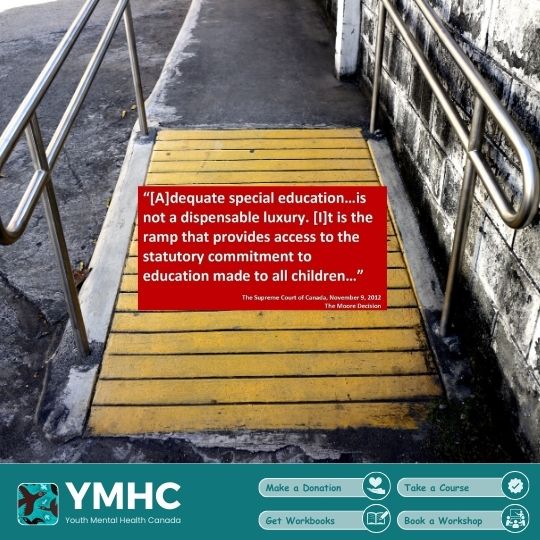
When we do not provide needs-based disability, trauma, and educational support for students to access and manage an education, it is called exclusion. Exclusion in education results from discriminatory practices, policies, systems, and attitudes that absolve institutions of their responsibility to support students.
School attendance challenges are one of the most pressing issues in education, youth mental health and suicide prevention.
A significant number of students lose their education, peer and school support networks, future potential, and many risk losing their lives. It is time to break the silence on this societal, structural, and systemic issue. It is time that we recognize that attendance in school is a human rights, mental health, disability, and suicide prevention issue.
Students with school attendance challenges experience attitudinal, societal, systemic, and structural discrimination through exclusionary policies, actions, and practices.
A significant part of the student population has been ignored for too long.